Tuesday, 2 February 2016

Thinking like the Traceur

This post is by Hannah Gravestock, scenographer and sportswoman.
Founder and managing director of Parkour Generations, co-creator of the A.D.A.P.T™ courses, coach and author, Dan Edwardes writes of success:

‘Why is being strong better than being weak?  Is it at all?
Or is the process of becoming strong just a vehicle, a path for us to focus our own understanding of ourselves, our world, our lives, and our place in the order of things?’

For the Parkour participant, also known as Traceur, an on-going commitment to self awareness is certainly part of the route to success. Only when a Traceur understands how and why they move can they find the flow of movement required to move in and around obstacles in their path. Whilst Parkour requires a skill set specific to the discipline it also offers a valuable insight into what can be achieved when focus is given to knowledge and understanding embodied by each individual participant.

In contrast, figure skating, like many other sporting activities measures success through a more externally visible and universally accepted approach. An international marking system turns success into a mathematical calculation and makes the identification of a successful skating performance easy. But does it really? The answer is both yes and no. Whilst computer systems enable judges to assess technical performance it is less clear how to judge a skater’s interpretation and artistic expression of a piece of music. Whilst it’s a common belief that the art of skating has been lost to the technical development of the sport, it is more likely that it’s become harder to understand, and therefore judge, how to synthesise new technical skills with advanced artistic ones.

For a synchronised skating team these problems are multiplied since success is located through many interlocking performances. Improving the success of a team therefore requires an understanding of how to assess and effectively combine the technical and artistic skills of each individual. To understand how this can be achieved it’s worth considering the Traceur’s attitude towards failure as well as individual success. Whilst Parkour training generally centres on personal goals and experiences, the focus on mental strength is relevant and applicable to a team. For example, for the Traceur failure to move smoothly from one object to another is not a negative outcome, but an inevitable part of a journey that leads to self awareness. To fail is to locate a weakness, better understand why it exists and make appropriate changes to a performance so that it doesn’t happen again. From this perspective the synchronised skater might do well to consider how and why they move, how well these perceptions relate to interpretations made by a third party and what new pathways can be taken to develop a performance as a result of this understanding.

This leads me to the area I hope to investigate as part of my proposed collaboration with the Hub Residency Team and the development of my investigations into training and performance practices. In this project drawing is used as a research method to access and explore embodied experiences of a UK synchronised skating team as they develop their performance. I have already conducted some initial drawing work with the team, but hope to continue the drawing and movement workshops through a competitive season to examine and challenge how skaters perceive success both individually and as a team.


drawing from synchronised skating workshop 


For more about Hannah see www.hannah-gravestock.co.uk 


Sunday, 31 January 2016

Ode to the Monument of Failure

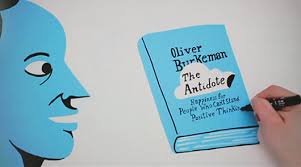
One of our collaborators, the author and journalist Oliver Burkeman, explores the counter-intuitive notion of a negative path to happiness and success that involves embracing failure, pessimism, insecurity and uncertainty. The following is an excerpt from his 2013 book The Antidote: Happiness for People Who Can't Stand Positive Thinking.

"In an unremarkable business park outside the city of Ann Arbor, in Michigan, stands a poignant memorial to humanity's shattered dreams. It doesn't look like that from the outside, though. Even when you get inside – which members of the public rarely do – it takes a few moments for your eyes to adjust to what you're seeing. It appears to be a vast and haphazardly organised supermarket; along every aisle, grey metal shelves are crammed with thousands of packages of food and household products. There is something unusually cacophonous about the displays, and soon enough you work out the reason: unlike in a real supermarket, there is only one of each item. And you won't find many of them in a real supermarket anyway: they are failures, products withdrawn from sale after a few weeks or months, because almost nobody wanted to buy them. In the product-design business, the storehouse – operated by a company called GfK Custom Research North America – has acquired a nickname: the Museum of Failed Products.
This is consumer capitalism's graveyard – the shadow side to the relentlessly upbeat, success-focused culture of modern marketing. Or to put it less grandly: it's almost certainly the only place on the planet where you'll find Clairol's A Touch of Yogurt shampoo alongside Gillette's equally unpopular For Oily Hair Only, a few feet from a now-empty bottle of Pepsi AM Breakfast Cola (born 1989; died 1990). The museum is home to discontinued brands of caffeinated beer; to TV dinners branded with the logo of the toothpaste manufacturer Colgate; to self-heating soup cans that had a regrettable tendency to explode in customers' faces; and to packets of breath mints that had to be withdrawn from sale because they looked like the tiny packages of crack cocaine dispensed by America's street drug dealers. It is where microwaveable scrambled eggs – pre-scrambled and sold in a cardboard tube with a pop-
up mechanism for easier consumption in the car – go to die.

The Museum of Failed Products was itself a kind of accident, albeit a happier one. Its creator, a now-retired marketing man named Robert McMath, merely intended to accumulate a "reference library" of consumer products, not failures per se. And so, starting in the 1960s, he began purchasing and preserving a sample of every new item he could find. Soon, the collection outgrew his office in upstate New York and he was forced to move into a converted granary to accommodate it; later, GfK bought him out, moving the whole lot to Michigan. What McMath hadn't taken into account was the three-word truth that was to prove the making of his career: "Most products fail." According to some estimates, the failure rate is as high as 90%. Simply by collecting new products indiscriminately, McMath had ensured that his hoard would come to consist overwhelmingly of unsuccessful ones.
By far the most striking thing about the museum, though, is that it should exist as a viable, profit-making business in the first place. You might have assumed that any consumer product manufacturer worthy of the name would have its own such collection – a carefully stewarded resource to help it avoid making errors its rivals had already made. Yet the executives who arrive every week at Sherry's door are evidence of how rarely this happens. Product developers are so focused on their next hoped-for success – so unwilling to invest time or energy thinking about their industry's past failures – that they only belatedly realise how much they need to access GfK's collection. Most surprising of all is that many of the designers who have found their way to the museum have come there to examine – or been surprised to discover – products that their own companies had created, then abandoned. They were apparently so averse to dwelling on the unpleasant business of failure that they had neglected even to keep samples of their own disasters."

This piece raises issues that we plan to explore in the Hub. A failure may seem just that until you reframe and repackage it, in this case by making a collection of consumer flops, resulting in a novel, useful and successful project - the Museum of Failed Products.

Human failures of mind, body and circumstance, such as mental health problems, physical illness, and relationship breakdown can also be harnessed positively. Artists regularly draw on trauma and distress creatively, resulting in inspirational and aesthetically stimulating works of art. An exhibition of light boxes in East London is testament to this. Letting in the Light showcases the work of 35 artists, all of whom have experienced mental health issues. Located in a neglected section of fast-regenerating Stratford, an area marked for ambitious growth post 2012, the work illuminates a strip of the High St that includes ubiquitous betting, fried chicken and pound shops.
Letting in the Light. Image: Andrew Whittuck (c) 

The most recent project by Bobby Baker's Daily Life Ltd, at first glance Letting in the Light appears simply a pop-up exhibition of interesting and colourful artwork, until you read the text accompanying each piece, for example:
'In recovering from the depths of depression, I experienced 
a spontaneous outpouring of creativity, resulting in over 3000 abstract digital paintings to date'.

'This piece symbolises that there is a way out of the depth of despair into the world above, where there is light and hope'.
Oliver's piece is also a reminder that by focussing on the future and obsessing on past successes or failures, we neglect the present. This is surely a reason for the surge in popularity of mindfulness-promoting activities such as adult colouring-in and meditation.

The huge potential of complex and often messy human experience, socially constructed as success or failure, lies at the heart of what our project will explore. I declare our intention to build a monument to failure - by learning from what works.

Thursday, 28 January 2016

If, on the other hand... A proposal for a performance piece from Curious

One of our proposed collaborators, Helen Paris, from Curious, has been thinking about the performance piece they might produce. One area Helen and I have been talking about is the experience of failure and the implications of failing. She writes:

‘If, on the other hand...’
Over 45 minutes and 45 seconds a woman in her mid forties slowly falls down sideways from vertical to horizontal over an angle of 45 degrees. As she falls she delivers a litany of missed chances, wrong paths taken, choices she could have made, should have made, which if she had made might have made things better, might have made her just a bit more successful. 

If, on the other hand
I hadn’t said yes to the
Decided not to have had the
Missed the first one and got the 1.15 instead I
Turned down the offer of the
Said yes I did fancy just one more soupcon of
Cancelled the
Brought an entirely different set of 
Thought: to hell with this! I jolly well WILL take…
Gloss


What makes a successful show? What makes a successful life? Choreographer Doris Humphreys describes how the modern dancer should always inhabit the ‘arc between two deaths’ - the moment of falling, between standing still and lying down. From the slip on the banana skin to the fall from grace, falling is often seen as failing. The possibility of failure is always present in the encounter with liveness.

Oh! the unswervering fidelity of live performance to life.

In the end, whatever decisions made, paths taken there is just this.

This very moment, with you. Here. Now. Then gone.