Showing posts with label creativity. Show all posts

Sunday, 31 January 2016

Ode to the Monument of Failure

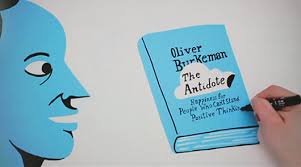
One of our collaborators, the author and journalist Oliver Burkeman, explores the counter-intuitive notion of a negative path to happiness and success that involves embracing failure, pessimism, insecurity and uncertainty. The following is an excerpt from his 2013 book The Antidote: Happiness for People Who Can't Stand Positive Thinking.

"In an unremarkable business park outside the city of Ann Arbor, in Michigan, stands a poignant memorial to humanity's shattered dreams. It doesn't look like that from the outside, though. Even when you get inside – which members of the public rarely do – it takes a few moments for your eyes to adjust to what you're seeing. It appears to be a vast and haphazardly organised supermarket; along every aisle, grey metal shelves are crammed with thousands of packages of food and household products. There is something unusually cacophonous about the displays, and soon enough you work out the reason: unlike in a real supermarket, there is only one of each item. And you won't find many of them in a real supermarket anyway: they are failures, products withdrawn from sale after a few weeks or months, because almost nobody wanted to buy them. In the product-design business, the storehouse – operated by a company called GfK Custom Research North America – has acquired a nickname: the Museum of Failed Products.
This is consumer capitalism's graveyard – the shadow side to the relentlessly upbeat, success-focused culture of modern marketing. Or to put it less grandly: it's almost certainly the only place on the planet where you'll find Clairol's A Touch of Yogurt shampoo alongside Gillette's equally unpopular For Oily Hair Only, a few feet from a now-empty bottle of Pepsi AM Breakfast Cola (born 1989; died 1990). The museum is home to discontinued brands of caffeinated beer; to TV dinners branded with the logo of the toothpaste manufacturer Colgate; to self-heating soup cans that had a regrettable tendency to explode in customers' faces; and to packets of breath mints that had to be withdrawn from sale because they looked like the tiny packages of crack cocaine dispensed by America's street drug dealers. It is where microwaveable scrambled eggs – pre-scrambled and sold in a cardboard tube with a pop-
up mechanism for easier consumption in the car – go to die.

The Museum of Failed Products was itself a kind of accident, albeit a happier one. Its creator, a now-retired marketing man named Robert McMath, merely intended to accumulate a "reference library" of consumer products, not failures per se. And so, starting in the 1960s, he began purchasing and preserving a sample of every new item he could find. Soon, the collection outgrew his office in upstate New York and he was forced to move into a converted granary to accommodate it; later, GfK bought him out, moving the whole lot to Michigan. What McMath hadn't taken into account was the three-word truth that was to prove the making of his career: "Most products fail." According to some estimates, the failure rate is as high as 90%. Simply by collecting new products indiscriminately, McMath had ensured that his hoard would come to consist overwhelmingly of unsuccessful ones.
By far the most striking thing about the museum, though, is that it should exist as a viable, profit-making business in the first place. You might have assumed that any consumer product manufacturer worthy of the name would have its own such collection – a carefully stewarded resource to help it avoid making errors its rivals had already made. Yet the executives who arrive every week at Sherry's door are evidence of how rarely this happens. Product developers are so focused on their next hoped-for success – so unwilling to invest time or energy thinking about their industry's past failures – that they only belatedly realise how much they need to access GfK's collection. Most surprising of all is that many of the designers who have found their way to the museum have come there to examine – or been surprised to discover – products that their own companies had created, then abandoned. They were apparently so averse to dwelling on the unpleasant business of failure that they had neglected even to keep samples of their own disasters."

This piece raises issues that we plan to explore in the Hub. A failure may seem just that until you reframe and repackage it, in this case by making a collection of consumer flops, resulting in a novel, useful and successful project - the Museum of Failed Products.

Human failures of mind, body and circumstance, such as mental health problems, physical illness, and relationship breakdown can also be harnessed positively. Artists regularly draw on trauma and distress creatively, resulting in inspirational and aesthetically stimulating works of art. An exhibition of light boxes in East London is testament to this. Letting in the Light showcases the work of 35 artists, all of whom have experienced mental health issues. Located in a neglected section of fast-regenerating Stratford, an area marked for ambitious growth post 2012, the work illuminates a strip of the High St that includes ubiquitous betting, fried chicken and pound shops.
Letting in the Light. Image: Andrew Whittuck (c) 

The most recent project by Bobby Baker's Daily Life Ltd, at first glance Letting in the Light appears simply a pop-up exhibition of interesting and colourful artwork, until you read the text accompanying each piece, for example:
'In recovering from the depths of depression, I experienced 
a spontaneous outpouring of creativity, resulting in over 3000 abstract digital paintings to date'.

'This piece symbolises that there is a way out of the depth of despair into the world above, where there is light and hope'.
Oliver's piece is also a reminder that by focussing on the future and obsessing on past successes or failures, we neglect the present. This is surely a reason for the surge in popularity of mindfulness-promoting activities such as adult colouring-in and meditation.

The huge potential of complex and often messy human experience, socially constructed as success or failure, lies at the heart of what our project will explore. I declare our intention to build a monument to failure - by learning from what works.

Friday, 25 September 2015

Workshop on Success: A Brief Report

On 18th September at Senate House in London we met some of our collaborators for our proposed research project. It was a great day in which we explored ideas and experiences.

What is success?
We started discussing the meaning of the word "success" (etymologically linked to the Latin word for succession, and thus a term with a strong temporal and causal component) and how the residency would serve as to critically analyse everyday conceptions of success as tied to individual achievement, fame, power and competition. Success demands not just competition but cooperation, and changes our perception of ourselves and the way other perceive us. Any meaningful examination of success requires also a reflection on failure. Our own interest in success comes from its relationship with health: how does doing well relate to being well?

Polarities
Apart from success and failure, we are interested in character and context, practices and structures, individuals and communities/organisations, internal and external, public and private. How do we achieve success, and what does it do to us once we have it? Several themes emerged from the discussion, including snatching success from the jaws of defeat; experiencing failure after being a success; failing in one domain while succeeding in another; performance anxiety and corporate psychopathy; and failure as necessary, as a useful and important aspect of growth, creativity and innovation.


Thursday, 10 September 2015

Promotion at Work: A Mark of Success?

Recently, there has been some discussion of the merits and especially the drawbacks of promotion at work. Opinions touch on some of the themes of our project, including creativity, ambition, achievement, satisfaction.


In one piece in Fortune, "Don't let yourself get pushed into a job promotion", the message is that many people accept managerial positions for the money, but then they find that they do not like the new responsibilities and the politics, and eventually would prefer to go back to their previous jobs. One key issue is that people dislike their new positions because of the stress and the long hours associated with them. What is success then? Being promoted and being miserable or not getting a promotion but maintaining a good work-life balance?

In another piece, published a few days ago in the New York Times, Rising to Your Level of Misery at Work, Arthur Brooks writes:
Ambitious, hard-working, well-trained professionals are lifted by superiors to levels of increasing prestige and responsibility. This is fun and exciting — until it isn’t.
People generally have a “bliss zone,” a window of creative work and responsibility to match their skills and passions. But then the problems start. Those who love being part of teams and creative processes are promoted to management. Happy engineers become stressed-out supervisors. Writers find themselves in charge of other writers and haranguing them over deadlines. In my years in academia, I saw happy professors become bitter deans, constantly reminiscing about the old days doing cutting-edge research and teaching the classes they loved.
I am very interested in the relationship between achievement and wellbeing, and Brooks indirectly addresses this. The two factors that seem to increase stress the most are (1) poverty, as it is stressful to lack resources; and (2) wealth, as it is stressful to manage the high pressures of work. There seems to be a blissful zone in the middle, but when people have achieved recognition and power, they do not resign from their positions to go back to their previous jobs, even if those jobs made them happier, because they see the regression as a failure.

Tuesday, 11 August 2015

Meeting Curious - thinking about failure and vulnerability in the light of success


Last week, at Wellcome Collection, I met with Helen Paris,who together with Leslie Hill form Curious. Curious have already created two artworks with the support of Wellcome Trust. One about ‘gut-feelings’ (The Moment I Saw You I Knew I Could Love You) was a collaboration with gastroenterologists at Barts, London. The other, about smell and memory (On The Scent), involved collaboration with a biologist at the National Centre for Biological Sciences, Bangalore, India.

Helen and I had a wide ranging conversation, but one element stuck in my mind – the possibility of failure and the opportunity to fail. Helen teaches performance at Stanford, USA. In one class she asks students to experience failure by creating ‘bad’ artworks. In order to succeed in the class they have to fail in their art, which Helen says the students find very confusing. What is the role of failure in success?

For artists, learning to take risks is necessary for success. Yet taking risks results in the possibility of failure. Drawing on Nietzsche', the early contemporary choreographer Doris Humphrey described how the modern dancers should always inhabit the ‘arc between two deaths’ - the moment of falling, between standing still and lying down. For Humphrey, lack of risk was the death of the artwork. If you were safely standing, or safely lying down, nothing interesting was happening. To dance, to create 'good' art, you must take the risk - and accept the possibility of failure.

But in healthcare, risk is unacceptable.

In a Lottery-funded project about interpersonal perspectives of suicidality, I was interested to hear service-user and family members discuss how while risk, and risk-assessment was very much part of many suicidal people’s lives, care and humanity was less evident. It seemed to many of our participants, that our risk-averse healthcare culture had reduced care to box-ticking, and that the humanity had all but disappeared. I am reminded of being told about an experience of being an inpatient (partly described in an article by Amy Woods & Neil Springham), when the service-user reported that hearing kind words from the ward cleaner was a standout moment of her mental health inpatient stay.

What is the relationship between risk and care? Trust seems important here, and was lacking for those participants who had been suicidal. I’m very interested in how trust manifests between people, rather than inhabiting any one person. It is neither a cognition, a behaviour nor a feeling, but perhaps a mixture of all these, happening across persons, not inside them - in a distributed way.

Helen Paris told me she thinks of trust in terms of an invitation – the invitation is given to the audience and she awaits the response. For example, in their recent piece Out of Water, Helen holds out her hand to an audience member, who is then led down to the edge of the sea. In making the invitation there is risk and vulnerability. How will the audience member respond? Helen says creating an atmosphere of trust and safety in the artwork is important.

There is risk and vulnerability in mental health care too. For service-users, who have perhaps been let down or hurt many times before, there is huge risk in approaching services for help, and allowing themselves to become vulnerable in the moment of trust. But for the staff too there is risk and vulnerability. (And I am thinking of my own experience here, as a trainee psychotherapist). If we make ourselves vulnerable by showing care for a service-user/client, what will happen? There is risk in creating attachments with the people we ‘care’ for (and this also goes for informal carers and wider friends and family of those with mental health problems). There is risk in acknowledging that as healthcare providers we often do not have adequate methods to ease suffering, and that we, sadly, sometimes fail to keep people safe or help them become well.

In thinking about success, failure, vulnerability and risk are all implicated. This seems to be the case in both artist endeavours and in healthcare.

Friday, 7 August 2015

Why I Keep Thinking about Collections...

Reading Room, Wellcome Collection

Last night I braved the tube strike to visit the Wellcome Collection, and I spent some time in the Reading Room. I’ve always loved libraries and bookshops, so it’s perhaps no surprise that I feel very at home there, but there’s something more going on. Ever since early in this project I’ve become hooked on this idea of collections, archives, libraries – there’s something here for me, but what? I have proposed that as part of the project we create a digital archive of all the ‘Stories of Success’ we come across during our residency – these may be oral stories, videos, texts, or other media; drawings, photographs, objects etc. They may be collected from members of the public (perhaps with the help of storytellers, SparkLondon), from our empirical work, or from our collaborators themselves. But my interest in collection seems to even go beyond that.

Is it to do with memories? Helen Paris, from Curious, (see separate post to follow) told me about a collaborator of hers, a dancer, who made a piece about how our memories for places can be held in a bodily library. I’m interested in the intersection between bodily memory and narrative memory, and wrote about this in my PhD research on guilt. I know some of our collaborators will be working with dementia, and that Victoria has done a lot of work in this area, so there are links here. Perhaps memory and memorialising are becoming more important to me as I get older. Do I see this project as such a precious opportunity that it must not be forgotten? Am I keen to remember? And to ‘re-member’; to embody this conceptual work and make it real, tangible.

Is it about storage and legacy, or a need to create something tangible for posterity? Something that can be shared, and that can transcend time? Am I feeling the urge to hoard ideas, less then become suddenly scarce? Maybe I want to create a perfect collection, tracking down every possible variation until I have a complete set... I do feel that if we were given two years to explore success we should create something that endures; that has duration; that lasts beyond the two years. On Tuesday, Michael and I noticed that we need to think about the sustainability and the legacy of this project for the new application form – but it’s more than this. It feels almost like a moral responsibility or an compulsion for me. We (Michael and I) were discussing how having a significant piece (actually several linked pieces) of empirical work gives us a strong grounding for our work, from a disciplinary perspective, but will also provide us with material that we can revisit well beyond the life of this project. And that hopefully others in our group, and beyond, can explore too.

Or is this interest in collections actually more about multiplicity? This feels most likely. The reading room contains many different perspectives on mental health, for example, some from the service-user movement, some critical psychology, some mainstream, some from psychiatry etc. etc. Voices that wouldn’t normally be heard together. All these multiple voices are allowed to coexist in a library. In an exhibition (and also in the reading room), exhibits in different media are allowed to rest next to one another. Objects from different centuries, continents, peoples, and of different ‘values’ can sit together. The audience/reader/viewer is treated as an intelligent and curious individual who has the capacity to take on board multiple viewpoints and to stitch them together in their own, unique ways. It feels like there are increasingly few spaces in our world where such multiplicity is celebrated.

I think it is this – the multiplicity – that specifically interests me about the idea of collections, libraries and archives. Perhaps too often I surround myself with people who think like me – providing the familiar, the comfortable. In my discipline, my view of the world is fairly marginalised, so it’s perhaps no wonder that I find others like me, and we club together to create a safe ‘home’ for ourselves. However, this intellectual ghettoisation is very limiting. I feel more inspired by the conversations I’ve had with artists this summer, than by any journal article I’ve read. I’ve suddenly remembered how reading non-scientific literature, looking at artwork, and going to the theatre is more than just an enjoyable activity, but can feed directly into my research.

Perhaps with this project we can 1) create a collection of people. Perhaps this is the very special and unusual thing - a chance for people who wouldn’t normally share space to meet, talk and create. I strongly believe that if you put interesting people together in a room, interesting things will happen. Of course, we need some structure, outcomes and milestones, but we must allow for flexibility and spontaneity too. And so then 2), through cross-pollination, and sparking off each other, we can generate a collection of ideas. Maybe one equal to any library or museum collection.

Friday, 1 May 2015

Connecting and Relating

Credit: Anthea Sieveking, Wellcome Images
For the project so far I have nominated two collaborators, who are both keen to take part:

Dr Leah Tomkins has a background in classics, then worked in industry for 20 years, including as Director of Change at the Cabinet Office. Like me, she retrained in psychology at Birkbeck and then completed her PhD. She now works in the field of Organisational Studies. I invited Leah because of her understanding of how organisations succeed, and particularly because of her work around the notion of the 'caring leader' and the Heideggerian idea of 'care'. I am also currently collaborating with Leah on a project about experiences of happiness. One area of interest is how achievement and happiness can be bound together - but can involve experiences of anxiety and shame as well. I see Leah's interests fitting well with Michael's and my work on relationships (Leah is also an expert in the IPA method and the phenomenological psychology approaches we use) and foresee her being involved the 'relationships and connectedness' stream, but also she will contribute to our stream on 'individuals and hierarches' as well.

Dr Andreas Aresti and the British Convict Criminology group are committed to developing critical insider perspectives on prison and the experiences of prisoners. Andreas is both an ex-prisoner and an academic. As such, he researches with communities and individuals who are impacted by the prison experience and co-founded the British Convict Criminology movement, which is an emerging theoretical perspective (originating in the US) led by ex-convict/non-convict academics. The group takes a critical perspective to existing criminal justice issues. In particular he has looked at resettlement. I am keen to work with Andreas and other members of British Convict Criminology on the 'relationships and connectedness' stream, to explore further how relationships succeed during time inside, and during the difficult resettlement period. Andy also shares expertise in the IPA methodology, but also works in more collaborative participatory ways with groups and individuals. As well as working academically, he is involved in shaping policy and doing community work, such as mentoring. With his personal and academic experience I also think Andy will be a great contribution towards the 'social contexts and alternative cultures'.

Wednesday, 29 April 2015

A Hub of Success

I've been thinking, dreaming, contemplating and moving towards action, in this case writing. The evolution of this project already represents success for me. It's almost ready. A group of people have come together (thank you Lisa and Michael) and developed something novel, each contributing unique insights and skills. Through a series of exchanges and interactions, many virtual, a programme of work has emerged. The discussions, (re) connections and interactions have reminded me of the importance of relational factors in achieving success. So, what are my plans for the project and who will I bring in to collaborate with?

My focus will be on creativity as a route to successful recovery from mental health problems. This addresses the Wellcome challenge of understanding the brain and how integrating humanities, arts and science approaches can contribute to this.


I will draw on my research focussing on engagement in creative activities and mental illness. Specifically my work on dementia that addresses another Wellcome challenge, that of investigating development, aging and chronic disease. This work is building evidence on how to provide and encourage supporting skills and resources in older people.


Success as an Outsider
I plan to engage with my colleagues and creators in the outsider art field to explore how creative endeavor can lead to success within the art world and the costs and benefits associated with this. Some, even those with severe and chronic mental health problems, have achieved considerable success as recognised artists. The current popularity of the ‘outsider’ art field is testimony to this. ‘Outsider’ art, a term coined by Roger Cardinal in 1972, defines artists as those outsider or peripheral to mainstream art training and infrastructure. It is now a contested term as it serves to reinforce differences between individuals within and outside the art world, and, implicitly, those with and without mental health issues or other challenges to social and cultural inclusion. Despite this, in 2013 there were at least 5 major exhibitions of outsider art in Europe alone which demonstrate success in the art world. The movement has its own dedicated art magazine: Raw Vision. There are now 2 commercial outsider art fairs in NYC and Paris each year where art made by untrained artists, many of whom have mental health or learning difficulties, exchange hands for substantial sums of money.

Whilst exhibitions, press coverage, and fairs increase the profile of artists and their work, it could be suggested that those benefiting are the art dealers rather than the artists themselves. Some artists indicate that commercial exposure can be exploitative and even damaging to mental health. I would like to explore relationships in this context, which would link to Zoe’s work stream. I will work with John Maizels, the editor of Raw Vision magazine. Coverage of artists and events in this publication represent an important marker of artistic success and wider recognition.

Outputs: John has agreed to work with us to develop an article or series of articles in his publication focussing on notions of success within the outsider art field. This will enable findings from our residency to reach an international audience in the specialist art field, a marker of artistic achievement (success).

Both the work on creativity and aging (dementia) and outsider art lead to many opportunities for public engagement. I plan multi art form activities working with Errol Francis. Errol is an artist, curator and researcher. He has recently established the research and creative consultancy –PSY- based at London College of Communication (I am a member of this group). Errol has a string track record of curating and directing festivals with mental health themes. Most recently the acclaimed ACE-funded Anxiety Festival 2014 and 'Acting Out' (2015) http://www.actingout2015.org (I am a curatorial consultant on ‘acting out’).

Outputs: An art exhibition and/or festival, across multi art forms and featuring new commissions on the themes emerging from the residency.

Success and Performance
I plan to explore creative expression through a phenomenological framework, informed by positive psychology. In particular I plan to look at artistic activity as a form of ‘flow’ state and one which results in enhanced wellbeing but also production of valuable aesthetic artifacts. Also, artistic activity may be viewed as a component of posttraumatic growth (PTG), that is a way that one’s life is enhanced as a result of traumatic experiences such as mental illness and events preceding it. I would also aim to explore how artwork made by those with mental illness may be used to successfully connect them to significant others and to the wider community. Here I plan a collaboration with the filmmaker David Bickerstaff. David has enjoyed considerable success with films on artistic, mental health and environmental themes. He has collaborated with the Wellcome Trust on numerous occasions e.g. Madness and Modernity and is working with them currently on a future exhibition that focuses on mindfulness.

Outputs: a short film on themes emerging from the residency and a peer-revised publication in Arts and Health.

I would like to broaden this work stream to include performance within sport and other arenas such as theatre working with Jules Evans and Hannah Gravestock.

Jules Evans is an author, philosopher and is policy director at the centre for the study of emotions at QMUL. He is also a broadcaster e.g. he recently presented a piece on flourishing on BBC Radio 3. He has been a BBC 'new generation thinker'. He is co-organiser of the London Philosophy Club and has been working with businesses, elite sportspeople e.g. Saracens football club and in prisons teaching flourishing and 'the good life'. His book Philosophy for life and other dangerous situations has been published in 19 countries. It has been #1 in Amazon.co.uk’s philosophy chart, a Guardian Books bestseller, and a Times book of the year. His next text (due 2016) focusses upon ecstatic experiences.

Output: Jules will develop a seminar series on flourishing and success in a variety of public, clinical and community settings.

Hannah Gravestock is a former elite ice skater. She provides performance coaching in theatrical and sporting arenas. She has established innovative training modalities e.g. drawing, to enhance success in the theatre and in sporting venues. She has worked with people with dementia in residential care settings.

Output: Development of performance and drawing based interactive training programmes.

Wednesday, 15 April 2015

Transformation and Success

me on the couch
I am writing this at a time that I am emerging from a period of intense personal and professional challenge. The themes of striving and thriving therefore resonate with me on many levels. Having explored the concept of Post Traumatic Growth (PTG) during my doctoral research I now have gained experiential as well as empirical knowledge of the concept. Indeed, at a time of striving to overcome difficulties I find myself in a position where I have a greater sense of gratitude for my family and friends, I have gained new insights, knowledge and compassion, and I have developed different and, I'd argue, enhanced future priorities. It wasn't an easy process however I do feel transformed. I hope that the Hub residency is part of that future and that we are 'the dream team'!

On re-reading the blog posts to date I am filled with anticipation and a sense of the possibilities that Zoë articulated. Like all of you I am in awe of the Wellcome space and the opportunities it presents. What a space in which to develop, debate, and transform. See me above on 'Freud's' couch in the new Reading Room, striving in a straightjacket, my daughter laced me into it, she thought it hilarious...

I'd like to explicitly link planned work to positive psychology, where PTG is a core concept as is the idea of 'flow' both of which relate to thriving. I've explored the flow state in athletes a creative way previously. When I read Michael's description of the Hub event in March it struck me that the experience shared elements of flow:
an unusual rhythm, alternating between periods of quiet reflection (or stunned silence - gloss as you prefer!) where we all tried to process the overwhelming surge of ideas and possibilities, and other periods of intense discussion where we worked together to give these ideas some shape

Saturday, 21 March 2015

Some Thoughts on Time and Success in Elite Sport

I am writing this blog from the new Wellcome Trust Reading Room, which is truly an inspirational place. Just to give you an example, take a look at this fantastic dress called 'The closure of the neural tube'.


'Closure of the neural tube' dress,
at WT Reading Room
(The neural tube is the embryonic precursor of the nervous system, and the closure of the neural tube is a fundamental process in embryonic development in vertebrates. Defects in this process lead to malformations such as spina bifida). I found it simply brilliant, and it reminds me of the times when I was working in a development biology laboratory at IFOM (Milan, Italy) during my lab rotation for my PhD.

I am a biotechnologist by background, and I still find anything related to biology/biotechnology fascinating, even if about ten years ago I have decided not to work at the bench and pursue instead the study of the ethical and social implications of biotechnology. I am now a Lecturer in Bioethics & Society at King's College London, and I have been working at the Strand Campus for the last five years.

My interest in investigating the concept of success comes from my explorations of direct to consumer (DTC) genetic tests to scout out children's athletic potential. What do DTC-tests have to do with success, you might think? Well, to start with DTC-genetic tests are sold to parents and coaches with the claim that they are able to identify early on an athletic potential in children of three, four or five years old. In the US, summer camps for talent scouting are not a recent invention, but the incorporation of genetic tests is. Leaving aside for the moment the question of the soundness of the science (how justified is the inference that a certain genetic polymorphism can form the basis for a 'successful' future sprinter, or long-distance runner?), what I have been interested in exploring are the decisions that parents and coaches make on the basis of these tests. These decisions shape the future of their children (see vignette from the New Yorker).

Parents shaping the lives of their children.
The assumption is that in the context of sport, an early specialisation and professionalisation is a necessary condition for the development of a future successful elite athlete. On the basis of this assumption, and in hindsight on the basis of the success of the individual, many decisions made by parents to pursue an aggressive education are justified.

In a paper published in 2013 on Sport Ethics & Philosophy I investigated whether such assumption is justified. I have only tangentially explored the concept of success in elite sport, but the more I have been looking into the narrative of success of professional athletes [and this relates to Zoë's project on stories of success], the more I have started to realise that success in elite sport (but also in other contexts where we think that an early specialisation is necessary, think of music!) comes about only at the expense of trade-offs, (and often very big ones!) with other things that we value in life.


Wednesday, 18 March 2015

Imagery and Optimism as Ingredients of Success

Credit: Jasmine ParkerWellcome Images
In the last couple of days I further elaborated my thoughts on the success project, and on ways my research questions can be addressed in collaboration with the other potential team members.

On Monday, as part of a public engagement event I organised for the Arts & Science Festival in Birmingham, I heard a talk by Amy Hardy on imagery that touched on many aspects of my interest in success.

She talked about imagining supports both memory construction and forward planning, and she discussed several examples of the costs and benefits of imagery. Some of her examples, the use of imagery to improve academic performance or performance in elite sports, and the use of imagery in cognitive behavioural therapy (CBT) in the context of post-traumatic stress, are cases in which the way we use imagery helps us overcome obstacles and achieve the results we want to achieve.

When I am thinking about a talk I need to deliver to a tough audience, imagining how giving the talk will be like before it takes place will make me less nervous and more confident, improving my performance. Similarly, it has been shown that elite sportspeople improve their performance in competitive events when they imagine the race or the match in advance of competing. The key is to focus on the process, not the outcome. Imagining the event is part of the preparation for it. It is conducive to success.